

Sanctum provides liquid staking infrastructure on Solana. For that service, Sanctum does about $5 million in revenues a year.
We are a small business in a big network (Solana), and we're proud of it.
Five years on, all four founders that started the Sanctum journey back in 2021 – FP, Han Yang, Jesse and Jaye – are still working full-time in Sanctum.
But our road here was long, strange and uncertain.
This is the untold story of how Sanctum became the liquidity infrastructure powering hundreds of liquid staking tokens (LST) on Solana.
We started as Socean in 2021
Before Sanctum, we were Socean. We got our start in early 2021 when we received a grant to work on staking infrastructure for Solana Labs to help build the canonical stake pool program.
We launched Socean in September 2021 to do “liquid staking”, raising $5.5 million in December from the likes of funds like Sequoia, Dragonfly, DeFiance, Jump Capital and more.
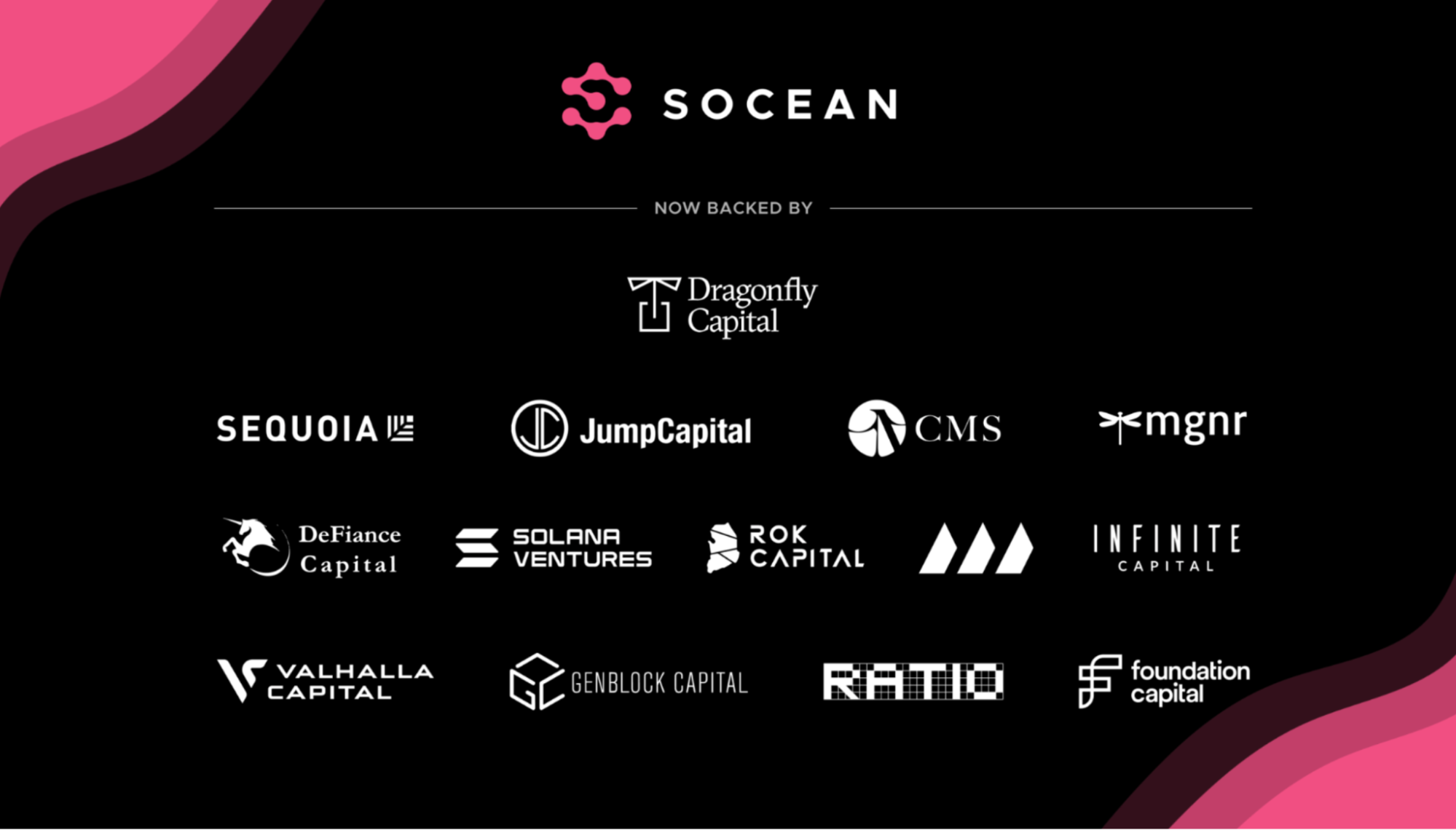
A lot has changed since then. Many of our investors on our cap table aren't around anymore. Crypto is brutal that way. Surviving long enough to tell an origin story is itself part of the story.
Liquid staking is winner-takes-all
When we started, the conventional wisdom about liquid staking was simple: Whoever spent the most wins.
At the height of DeFi summer, the two liquid staking giants Lido and Marinade poured millions of dollars a week into liquidity incentives to bootstrap the deepest pools and win market share.
Our competitors had more money and a first-mover advantage. We knew we had to strategise differently. So we looked at it from a different angle.
We realised that unlike Ethereum, liquid staking tokens on Solana are inherently fungible with one another. Underneath every LST is the same staked SOL, anchored to the same number of lamports. They can be converted from one to another with zero slippage.
And if that's true, then the "liquidity moat" everyone was killing themselves to build wasn't really a moat at all. Every LST could share a single source of liquidity.
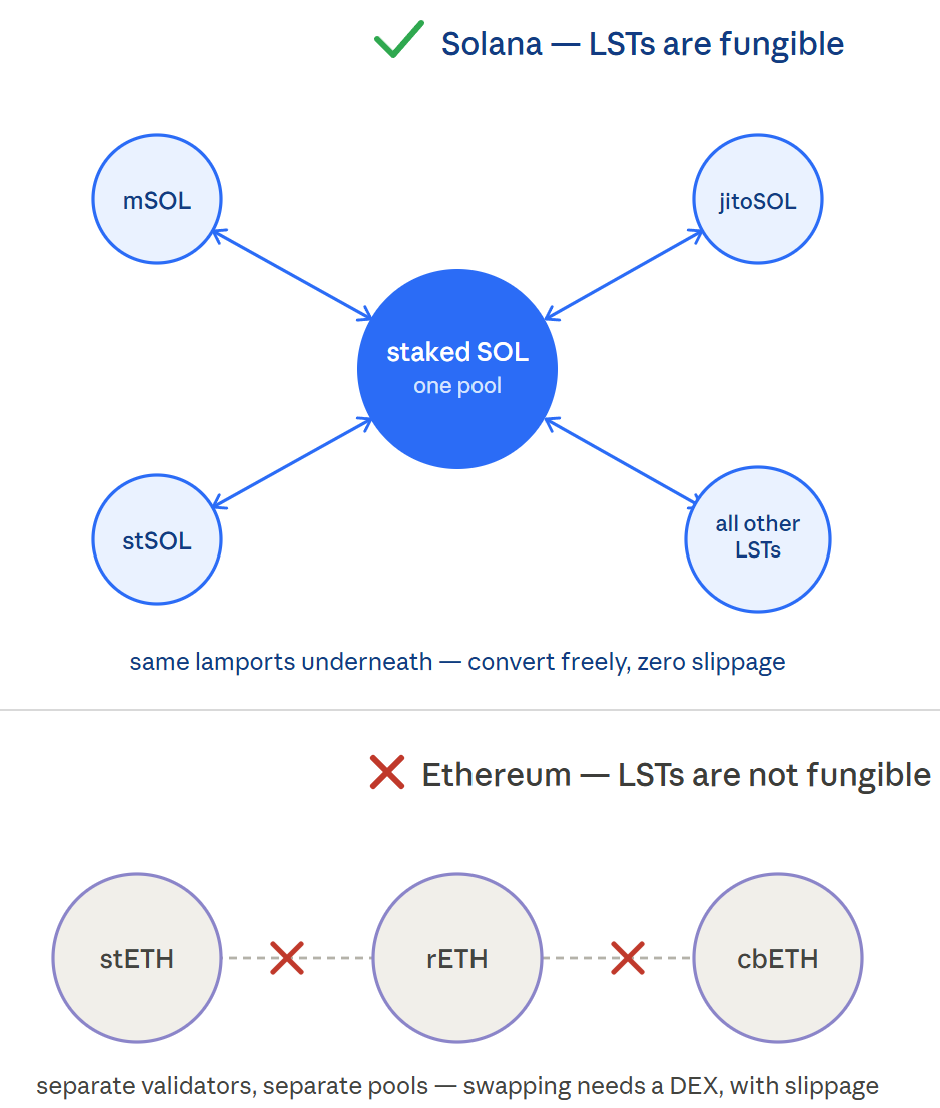
So we asked ourselves: What follows from the fact that stake pools are fungible and have zero marginal cost to set up?
The answer was a shared infrastructure that let any LST issuer, no matter how small, be liquid from day one.
Grow the number of LSTs, then capture a small fee on the trading volume that flows between them. That was our bet.
In business school, they call this “commoditising the complements”. The classic example is Microsoft capturing value at the OS layer by making the tools around it free. Similarly, Sanctum makes maintenance of an LST free by removing the costs to seed AMM liquidity, then captures value in our liquidity infrastructure: the Router and Reserve.
Though this seems obvious today, it was contrarian at the time. Solana then had only five Solana LSTs, and our bet was that there would be hundreds eventually.
Simply put, instead of trying to win the biggest slice of a fixed pie, we decided to grow the pie itself.
Investors told us that the LST game was a natural monopoly. We didn’t listen.
2022: Early beginnings
In July 2022, we launched unstake.it — a single pool of SOL that let anyone convert staked SOL from any validator back into liquid SOL with minimal slippage. It was the first concrete piece of what eventually became Sanctum.
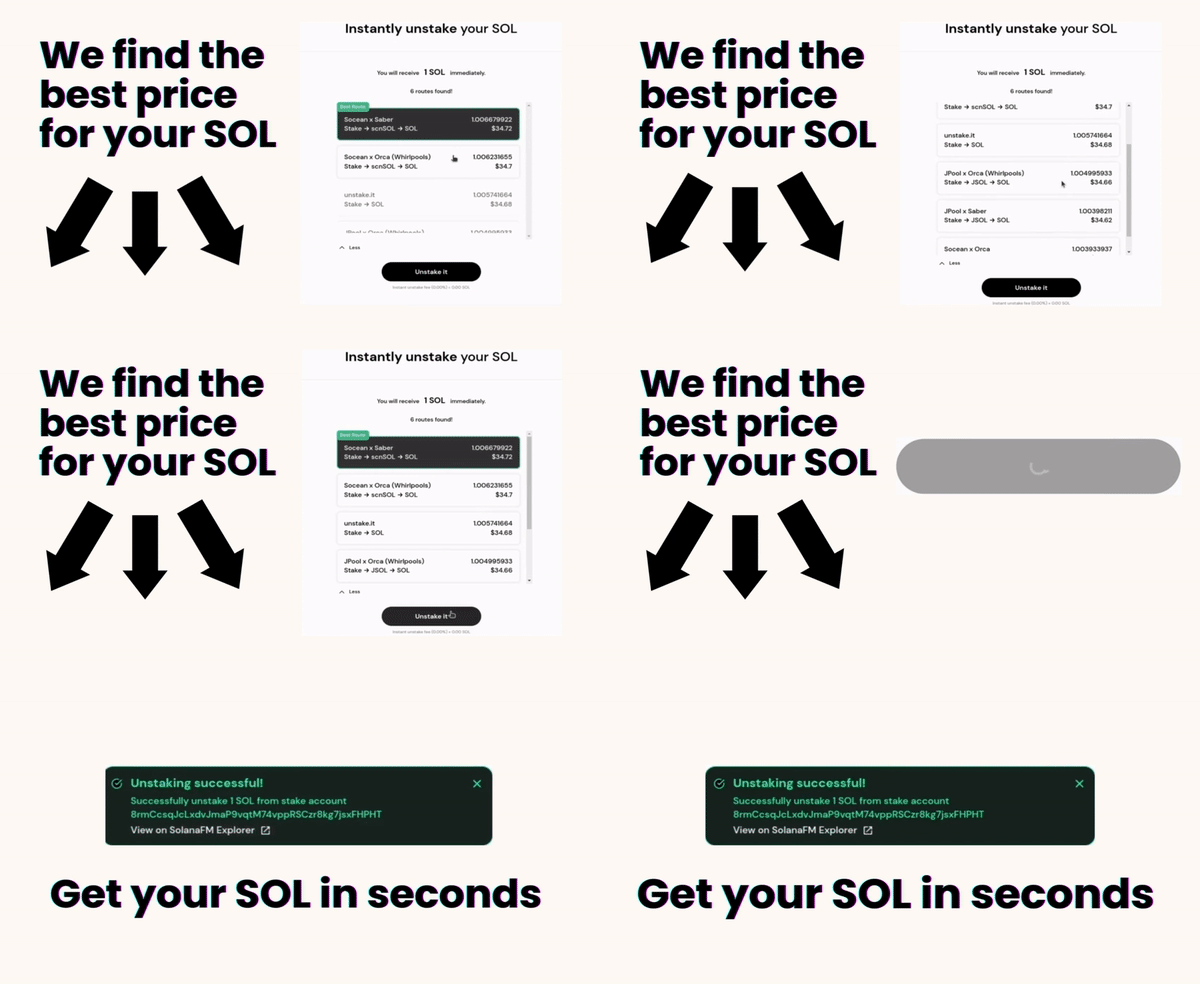
unstake.it solved an obvious Solana staking problem. When you stake SOL, you lock SOL up for an entire epoch of ~2 days. If you want out early, unstake.it would give you liquid SOL instantly, and we would take on the waiting and unstake it ourselves to replenish the pool.
That simple idea is what eventually became Sanctum.
But it didn't work immediately. In the early days of unstake.it, we were barely making a hundred dollars a day and nowhere near sustainable.
There were plenty of moments where we wondered whether a Solana with a hundred LSTs would be a reality. The team came close to quitting more than once.
Our first real demand came from disaster: when Slope Wallet got hacked, users rushed to unstake.it en masse to dump their staked SOL and get out. It was our first genuine revenue rush, and the first hard proof that when people needed instant liquidity, they came to us.
2023: Turning point
Sanctum’s biggest turning point came out of the post-FTX collapse.
When FTX went down, we watched a specific, ugly failure play out on lending protocols.
SOL was heavily borrowed for leveraged looping strategies. This was your classic leveraged yield farming strategy: deposit LST, borrow more SOL, buy more LSTs, repeat – juicing your 6% yield into 20%. Everyone was levered to the hilt, and the whole game leaned on Solend having enough SOL on hand.
When markets crashed and mSOL depegged, there was no SOL left in the protocol to pay liquidators. So the liquidations couldn't happen and depositors lost millions as prices kept falling. To make matters worse, the forced unwinding tanked the price of SOL itself, feeding the spiral.
The root of the problem was that there was no SOL backstop that liquidators could tap to close LST-collateralized positions.
Sanctum decided to build a safe haven of SOL: a reserve that could provide deep liquidity in a crisis and keep the system going.
We made our biggest upgrade yet to unstake.it and expanded it to accept every LST (i.e. stake pool token) on Solana, not just raw stake accounts. Jupiter then integrated us into its routing engine.
This marks our most pivotal turning point. That is where the company as it is known today was truly born, and we relaunched in late 2023 as what would serve as Solana's stability protocol: Sanctum.
2024: Takeoff
Only after three years of working on Sanctum did we catch our first break.
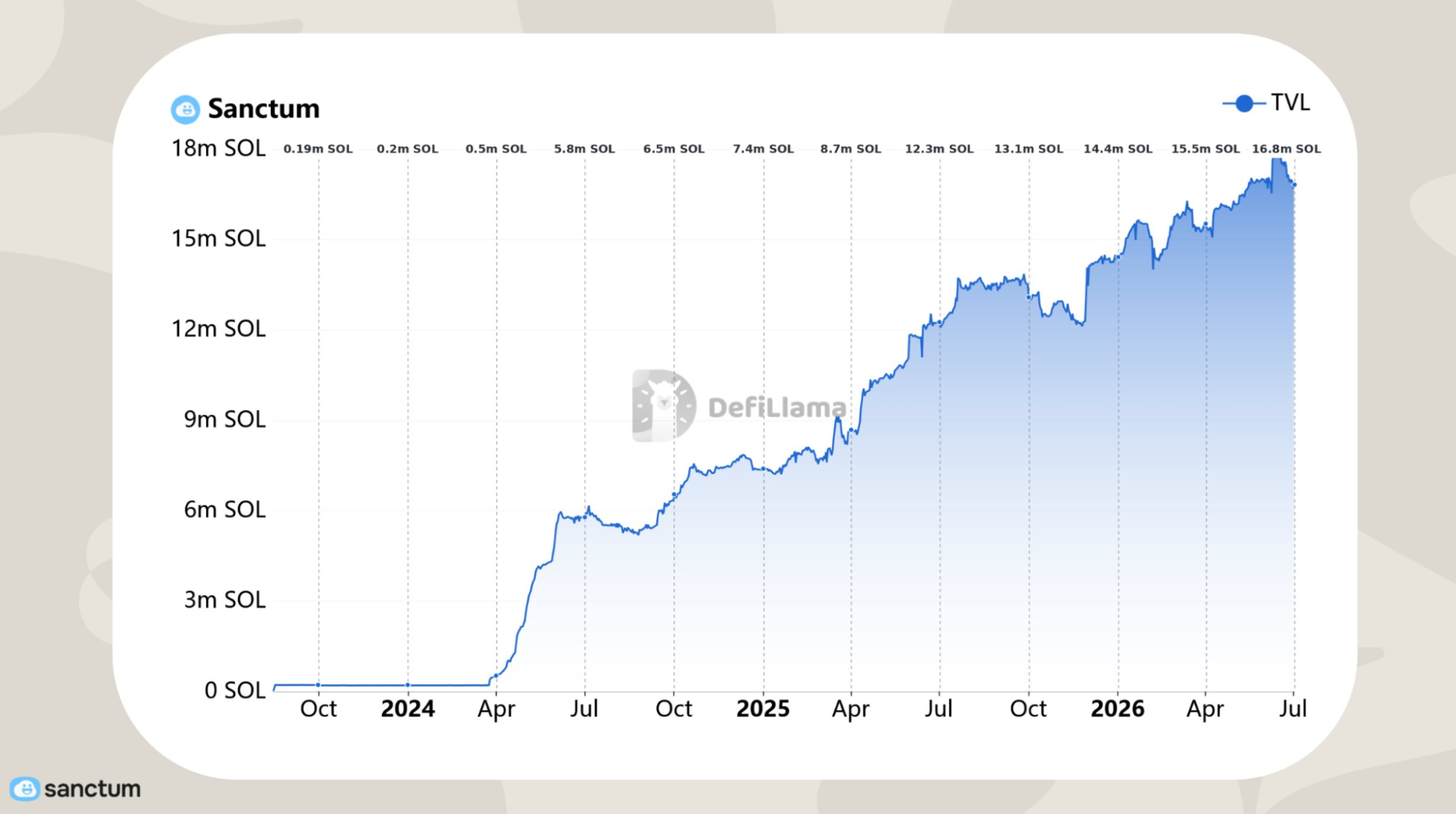
Sanctum’s TVL took off in early 2024 when we launched our wildly successful Wonderland marketing campaign.
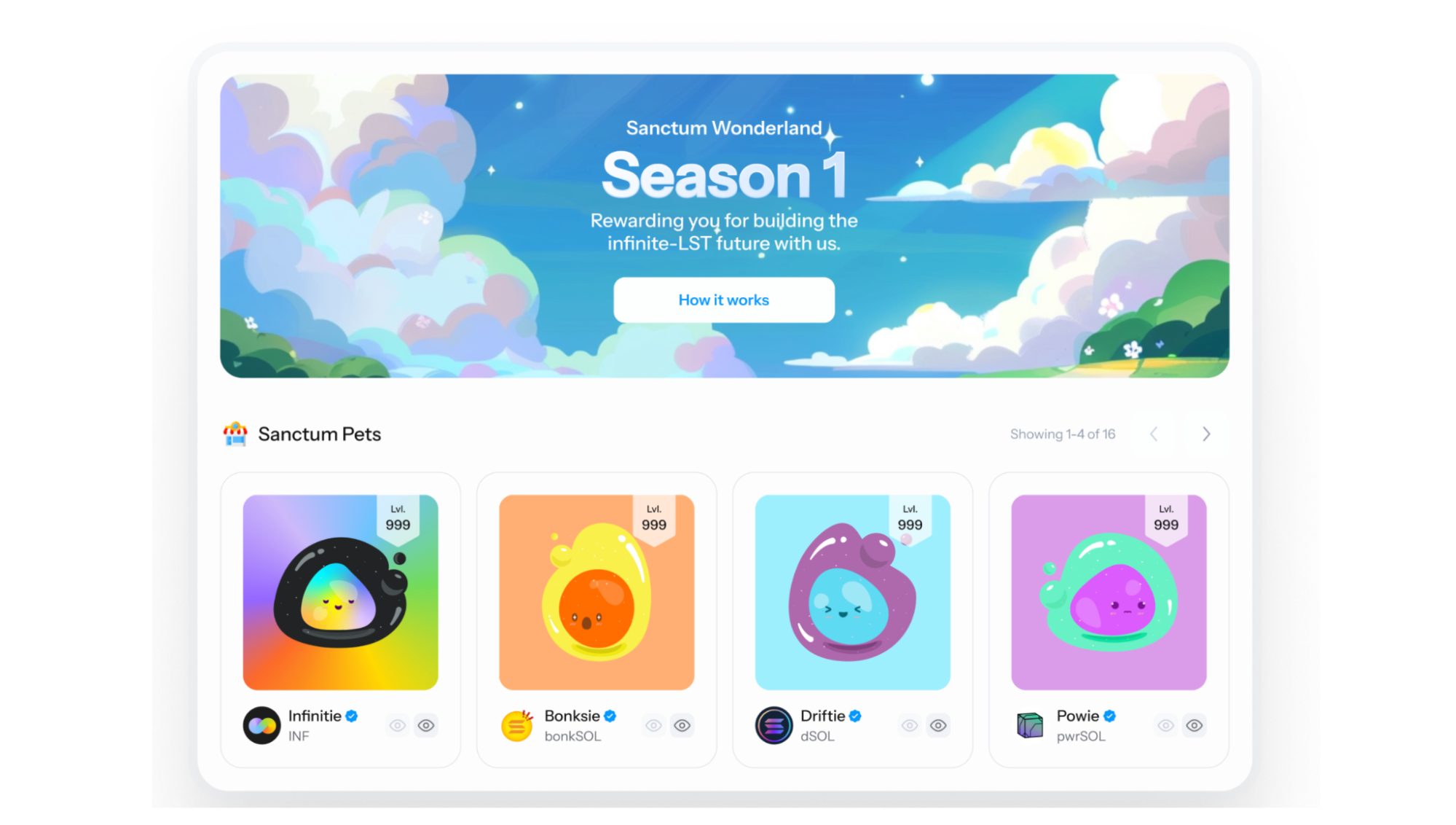
New LSTs launched with Sanctum (JupSOL, hSOL, bonkSOL) each launching on top of the liquidity infrastructure that Sanctum already built.
The value prop was obvious. Sanctum’s liquidity infrastructure saved LST issuers millions in their own token emissions to bootstrap AMM pool liquidity.
Most of them could not exist without Sanctum. Our liquidity, routing, and reserve pool together form a public good that powers hundreds of Solana LSTs today.
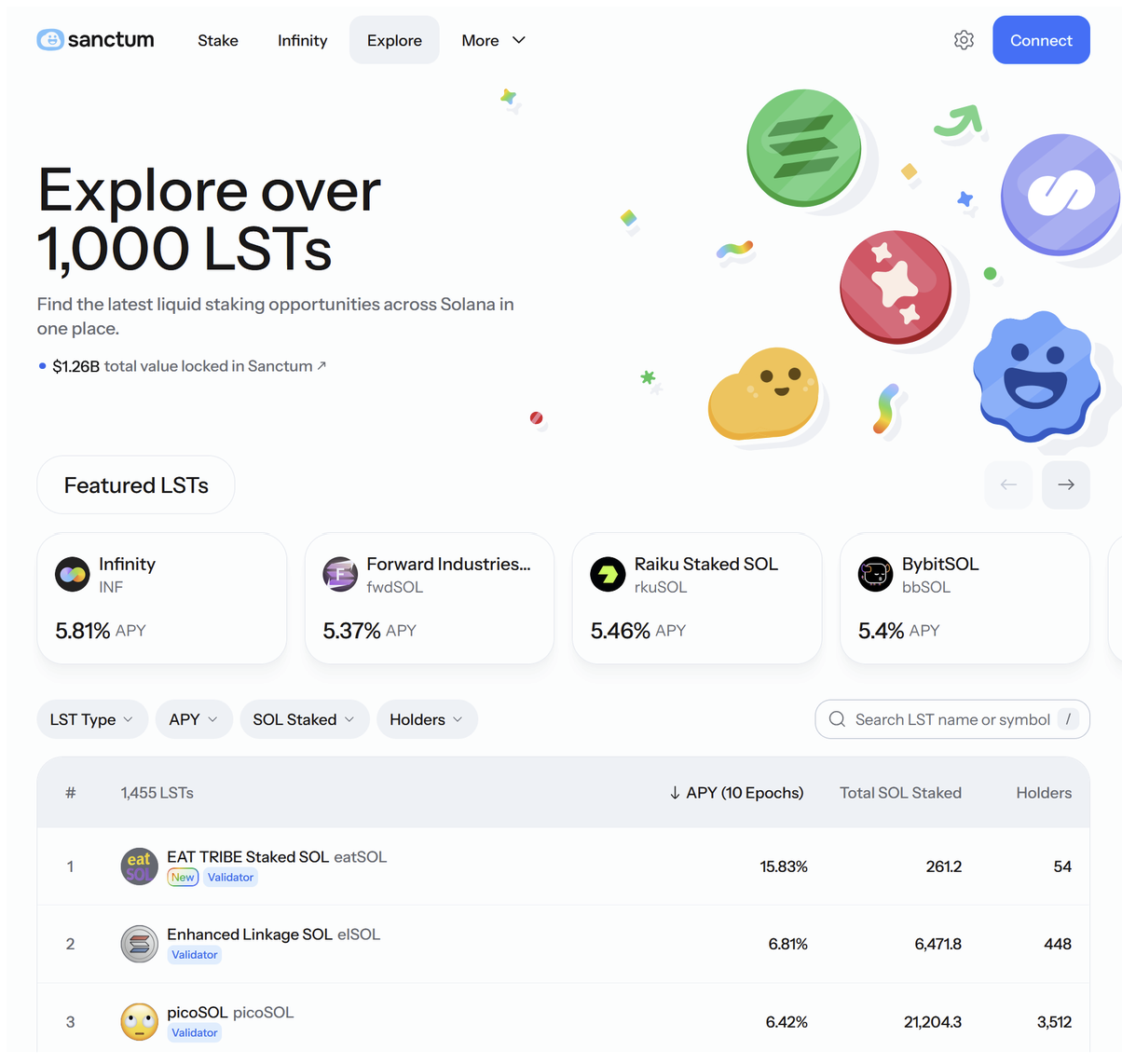
Sanctum is the reason why the liquid staking market in Solana looks so different from other chains. Solana has hundreds of active LSTs while Ethereum's liquid staking landscape has consolidated largely into two players: Lido and Binance.
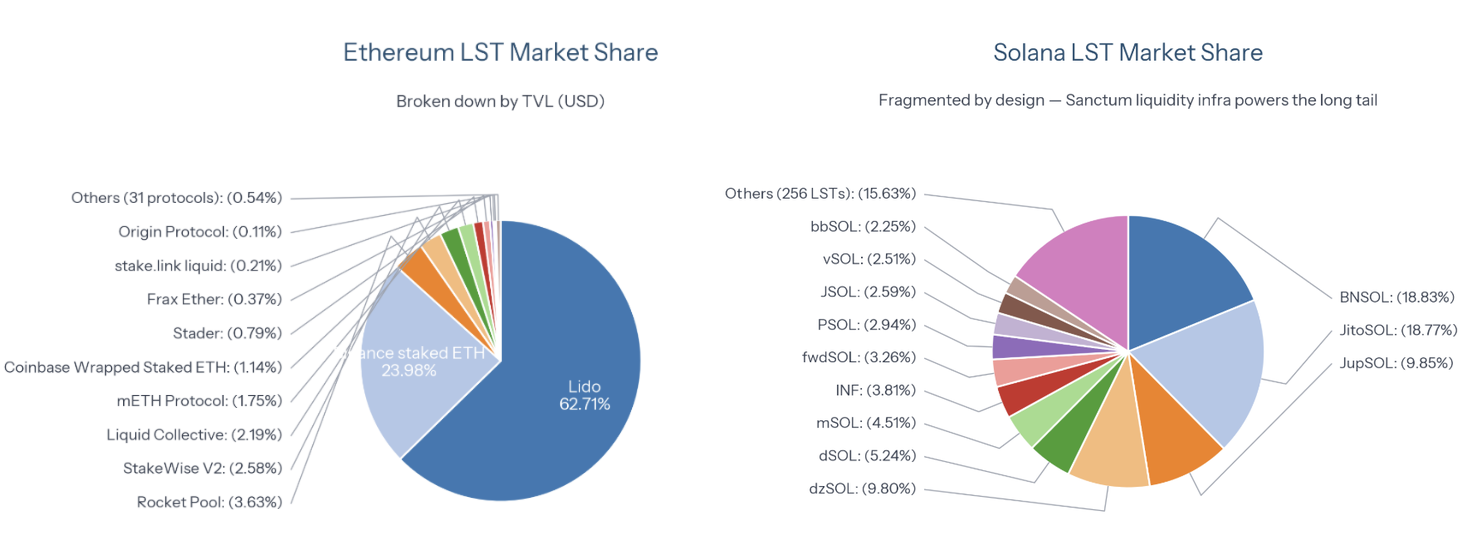
When every LST has to bootstrap its own liquidity, only the ones with the largest warchests can play and the market tends towards concentration. But when liquidity is shared infrastructure, a thousand flowers can bloom. Sanctum’s ~17 million SOL in TVL today is thanks to the hundreds of partners who trusted us with it. In a space where smart contract exploits are commonplace, we are very grateful for their trust.
And that trust is paramount to us. To date, Sanctum has never suffered an exploit. Nor have we lost a single partner LST to churn. 5 years in, we still believe in Solana, and above all, the simple idea that all SOL should be liquid staked and free to move.
To learn more about Sanctum, you can visit Sanctum’s Investor Relations Hub at https://investors.sanctum.so/ or reach out to our investor relations team at donovan@sanctum.so