

It’s been 8 weeks since we launched INF v2 - the first major upgrade to INF since creation nearly four years ago.
For a long time we’ve said INF is the best place to grow SOL and with INF v2, that hasn’t changed.
Since v2 launch, for every 100 SOL worth of INF, an INF holder now has 101 SOL, +1 SOL more than they had at launch.
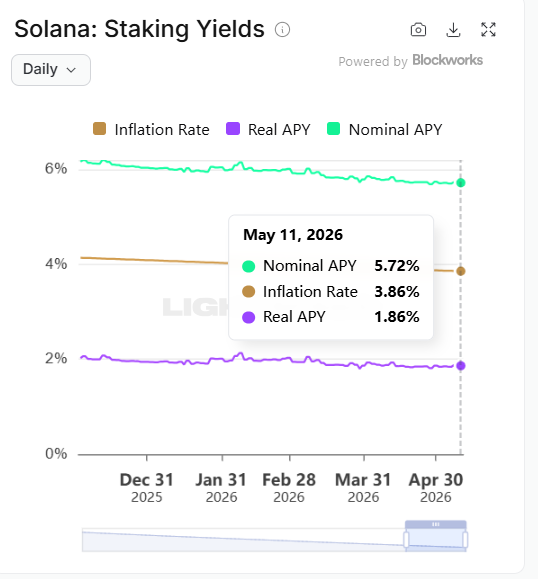
But, to acknowledge the elephant in the room, it’s been a tough market environment for staking yields on Solana. As a lot of the on-chain activity seen in 2024 / 2025 has slowed down in 2026, yields have followed.
Our friends at Blockworks have a nice chart depicting this trend:
Alright, So How Did INF Perform?
In the aggregate, INF continued to be the standout LST averaging 6.3% APY. It doesn’t sound like a lot for the Solana OG’s of old, but in the same period JitoSOL averaged 5.7% and mSOL 6.1%. The broader LST Median for the same period remained under 6%.
| LST | Avg. APY |
|---|---|
| INF | 6.28% |
| mSOL | 6.09% |
| JitoSOL | 5.69% |
| LST Median | Trended down from 5.8% to 5.59% |
While the final average numbers since launch put INF on top (3% higher than mSOL, 10% higher than JitoSOL), I’ll show you in a moment that it was a bit of a bumpy ride. I’ll admit that before launching INF v2 we said yields would be smoother.
We now have certainty that the new v2 mechanism absolutely smooths out yields across multiple epochs, but looking at the following chart (APY since launch) tells a slightly different story:
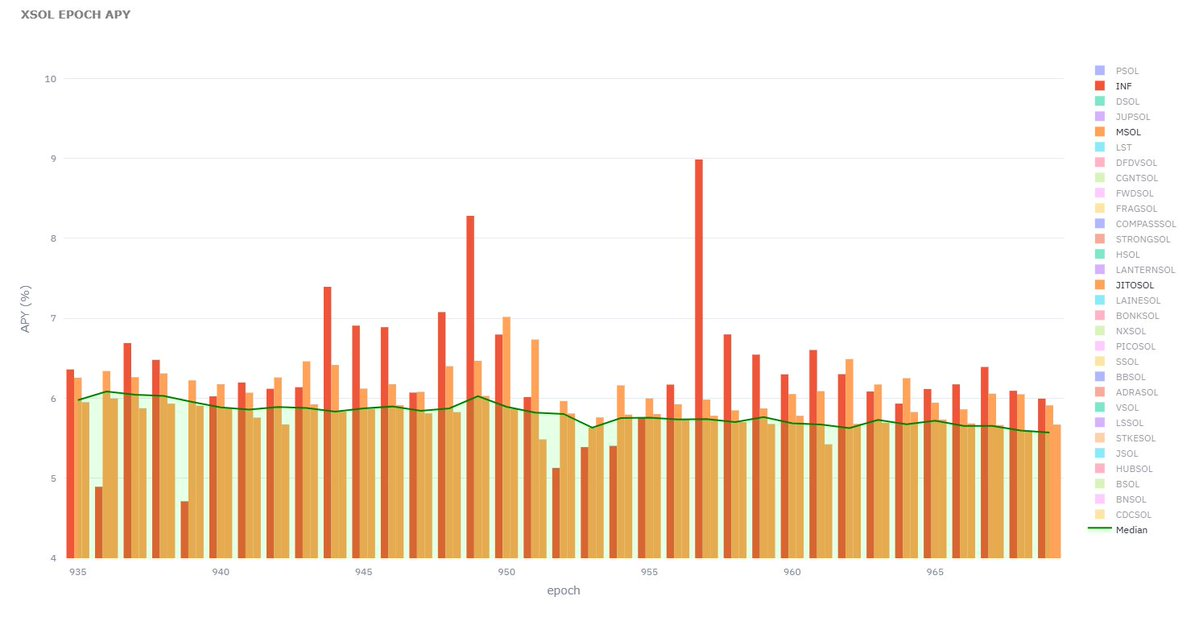
Here’s what I see: a few big up-spikes and a few lull-periods down low below the LST Median (green line).
So, let me add 5 numbers to the chart and explain what happened in each:
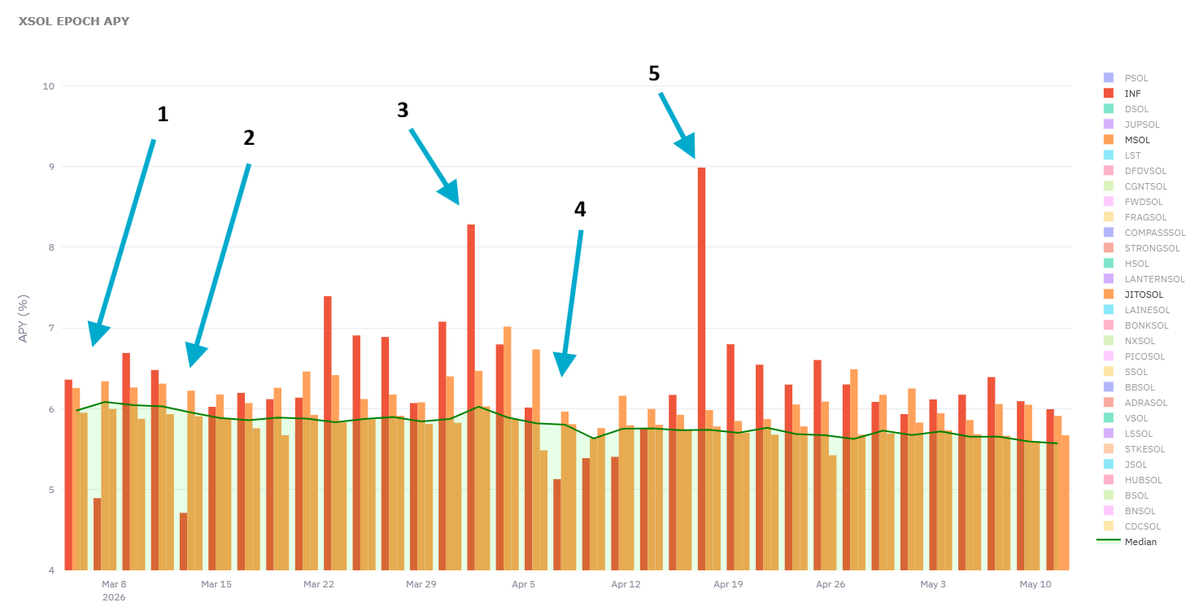
1) Epoch 936 - this is where we unstaked most of INF v1’s existing stake in order to rebalance as part of the v2 launch. In case you’re not aware, Infinity holds a basket of LSTs inside and so INF is like an LST of LSTs. But, in INF v1, this basket was really wide and thin, and some of the LSTs it held weren’t high-performing. As part of v2, we changed the portfolio strategy of INF to hold a more concentrated basket of higher yielding LSTs, improving INF’s APY and streamlining the rebalancing process each epoch. This change in basket added an around 10% higher relative improvement to INF’s APY.
2) Epoch 939 - this was when the yield smoothing mechanism kicked in the real secret sauce of the v2 design. What this meant was INF grabbed a large portion of the yield for that epoch and held on to it to begin smoothing out distributions over coming epochs. The napkin math of the smoothing mechanism on APY for the first 5 epochs from 939 onwards can be seen in the following table:
| Epoch post-implementation | APY vs. expected 6.5% baseline | Reduction vs. expected |
|---|---|---|
| 1 | 5.47% | 84% of expected APY |
| 2 | 6.34% | 97.5% of expected APY |
| 3 | 6.4985% | 99.97% |
| 4 | 6.4997% | 99.996% |
| 5 | 6.5% | 100% |
3) Epoch 949 - the big spike up, this was due to a market shock increase in swap volumes. Unfortunately, this was the epoch of the Drift attack which resulted in a lot of LST swap volume on-chain. INF tends to shine during market shocks (e.g., October 10 crash)- this was no exception.
4) Epoch 952 to 956 - as part of the INF v2 new portfolio, a larger portion of INF’s stake was focused around LSTs with stake to the Sanctum Validator. In epoch 952, our Validator operations team changed the validator fee structure for 1 epoch as part of a routine process. This resulted in a much lower INF APY for several epochs. Which leads us to...
5) Epoch 957 - this is the epoch which we reimbursed the full SOL amount to INF from the validator change noted above (#4) resulting in the large APY spike to 9% - all netted out. Note: the Sanctum Validator is charging 0 fee to stake in Infinity (INF).
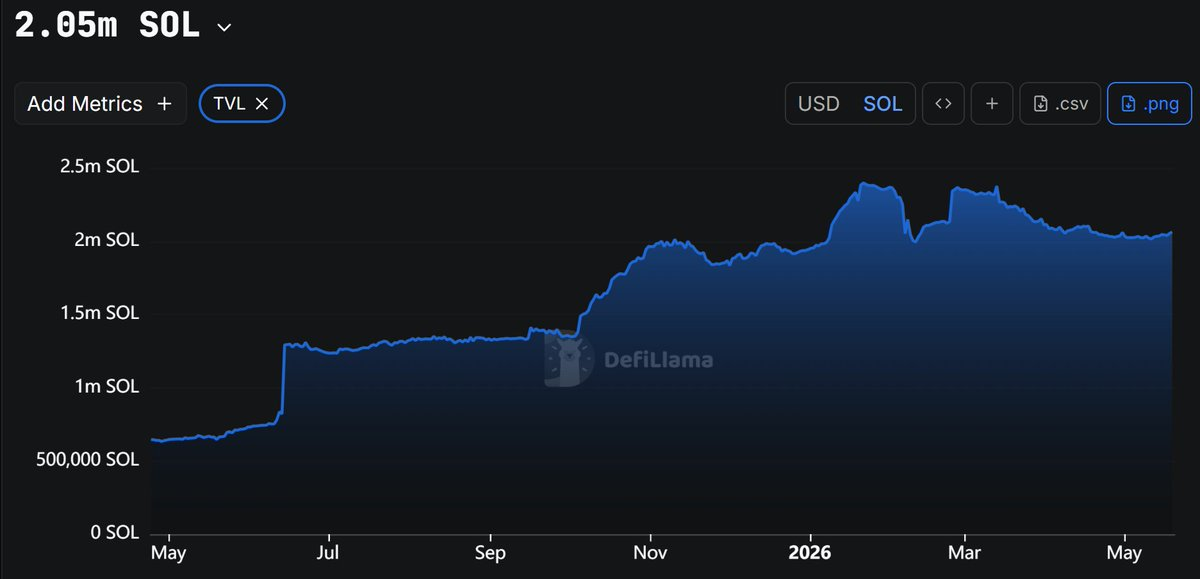
INF TVL Progress
Since launch, INF’s TVL has been incredibly stable around 2.05m SOL, despite the broader market down-turn. This is something we’ve seen time and time again - in periods of market volatility (to the downside, and up), INF does well due to increased LST swap demand driving higher APY to INF.
Looking Ahead
Infinity has been a major part of on-chain LST-LST and LST-SOL liquidity and swap volumes over the past four years on Solana through bull and bear cycles. While v2 brought improvements to INF for holders, we’ve been watching the rise of Prop-AMM’s closely.
Moving forward, we’re looking at how we can make the Sanctum Liquidity layer (Infinity and The Sanctum Reserve) even better and easier to see for LST holders, swappers and loopers (a.k.a. ‘multipliers’) - ensuring INF continues to be the best place to grow SOL on Solana. More to come on this soon.
Finally, with INF v2 we added the first block-by-block yield distributing mechanism for an LST. We haven't really shown this off yet (in this article, or anywhere). Once we've gathered a bit more data, I'll look to show just how comfy INF holders are in SOL terms compared with peers.